


QATM Qscratch 20 GO Microhardness Tester for Coating Testing
Артикул: Qscratch 20 GO
The Qscratch 20 GO is a semi-automatic macro/micro scratch tester for standardized quality control of coatings and surfaces. It is designed for laboratories that require defined scratch tests, reliable operation, and traceable results – especially for single measurements with progressive or constant load.
Micro / Macro Scratch tester Qscratch 20 GO Test Methods & Force Range
The system combines a dynamically automated Z-axis, motorized Y-axis, electronic force control, and intuitive QpixControl2 software into a practical workflow for routine surface and coating testing. Scratch tests can be performed under controlled conditions, optically evaluated, and documented in structured test reports. The Qscratch 20 GO supports relevant standards including DIN EN ISO 20502, ASTM C1624, ISO 27307, and ASTM G171, making it a compact solution for production-oriented monitoring, routine testing, and reproducible scratch test results.
Micro / Macro Scratch tester Qscratch 20 GO Product Advantages
|
|
Micro / Macro Scratch tester Qscratch 20 GO Test Methods & Force Range
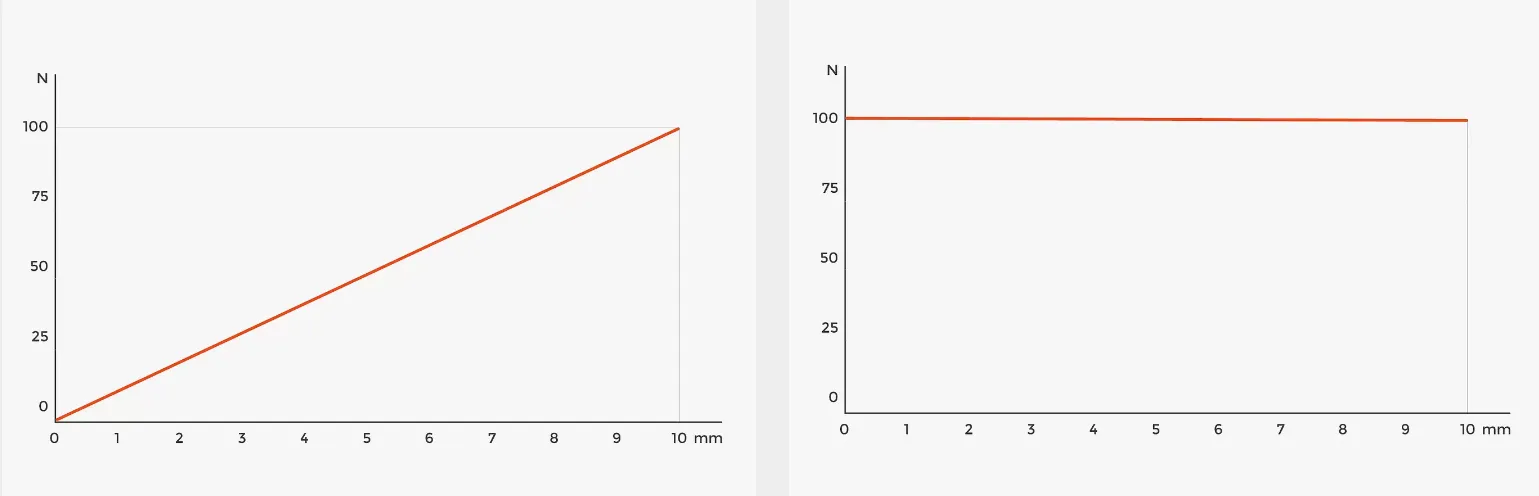
| Method: Progressive load The initial and final loads, as well as the load rate, are defined. The load increases along the scratch length; visible events can be assigned as Lc points at their respective positions. ISO: PFST - progressive force scratch test ASTM: PL - progressive load Lc: Load critical | Method: Constant load The normal force remains constant over the scratch length. This method is suitable for individual measurements, series compa-risons, and recurring test conditions in a quality control setting. ISO: CFST - constant force scratch test ASTM: CL - constant load Lc: Load critical |
A defined scratch. A controlled load. A clear evaluation.
In the scratch test, a diamond stylus is moved across the coated surface under a defined normal force. Visible events such as cracking, spalling, or penetration of the coating are localized along the scratch mark and assigned to the corresponding critical load. Thus, the scratch mark not only indicates that a failure is occurring; it also shows where it is occurring—and makes the load at the critical point traceable.
Defining and assigning failure events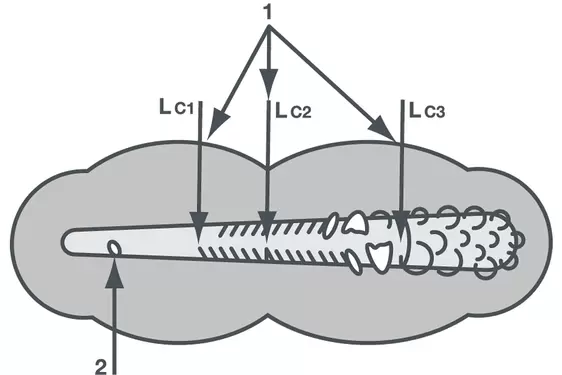
Defining and assigning failure events
Lc1 - Initial cracking / plastic deformation
Lc2 - Spalling
Lc3 - Penetration of the coating down to the substrate
Ceramic coatings. Evaluation of adhesion and failure modes.
The following interactive section shows how typical failure events along the scratch track are analyzed. Click on the LC points to see how cracking, spalling, and coating penetration are associated with specific positions and loads.
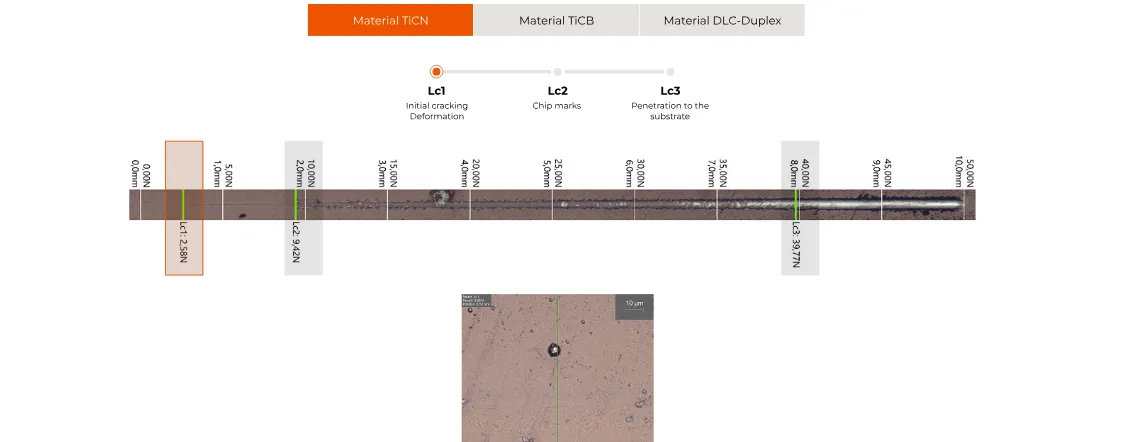
Thin, hard ceramic coatings (typically 0.1 - 30 μm)
| Thin, hard ceramic and technical coatings (typically ≤ 20 μm)
|
Illuminated status display
Brings light into the dark
The illuminated QATM logo displays the current device status at a glance. The range of flash intervals indicates whether the device is operating automatically or is free to be used for new tasks for staff all around the lab. In addition, the LED test space lighting, installed as standard, ensures that samples and sample holders are positioned correctly.
On the Qscratch 20, it also ensures uniform light intensity for sample imaging.
Scratch workflow
Scratch workflow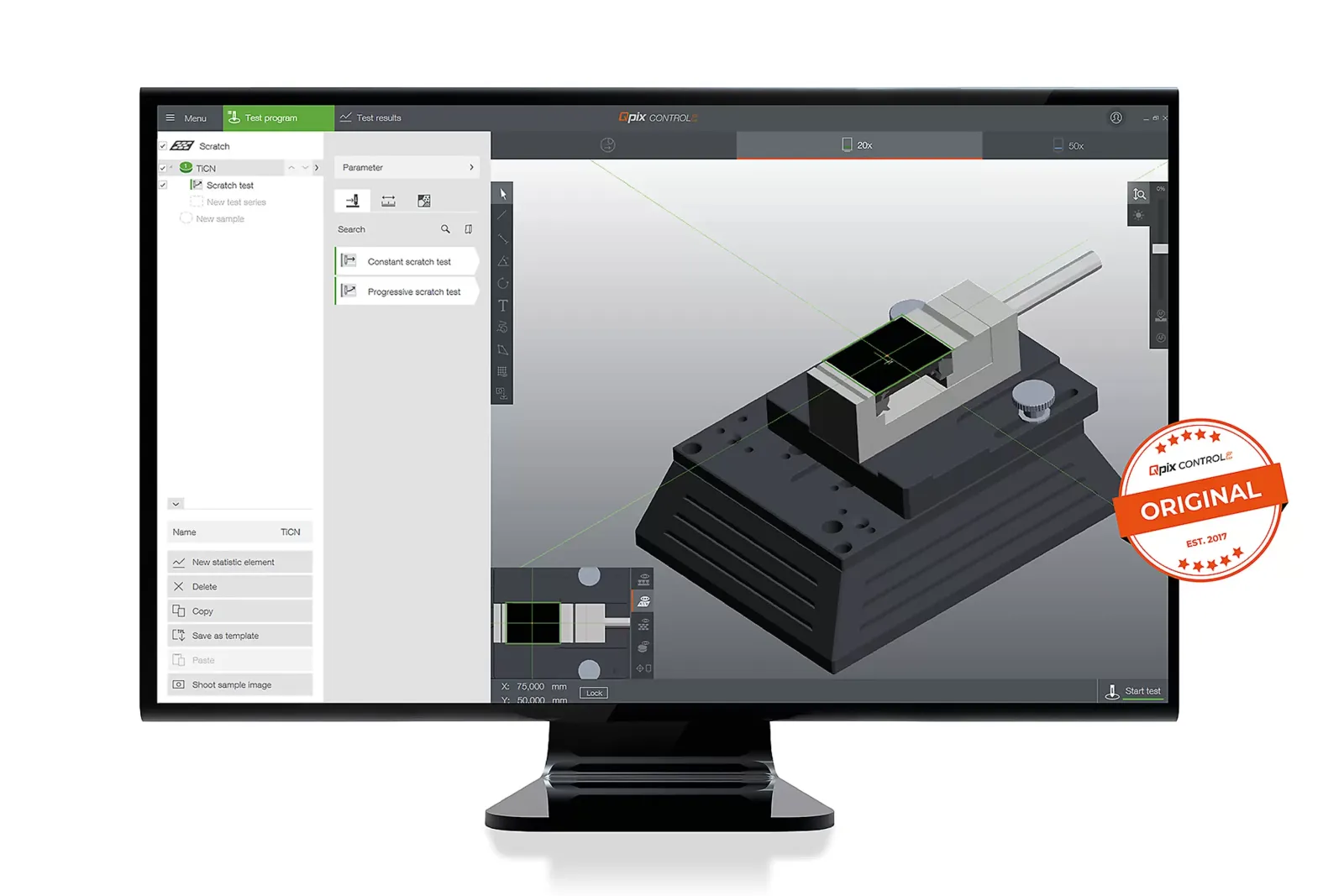
QpixControl2 is more than just a user interface: The software combines a patented 3D user concept with a seamless scratch workflow. Tests can be easily created, scratch marks visually positioned, single measurements processed automatically, and relevant Lc events evaluated in a structured manner. From test definition through image capture and evaluation to data management, export, and standardized reporting, all steps remain integrated within an intuitive software environment. This reduces operational effort, supports reproducible processes, and enables the efficient use of scratch testing in production-oriented quality assurance.
1. Load sample
3 Steps to the result
1. Load sample
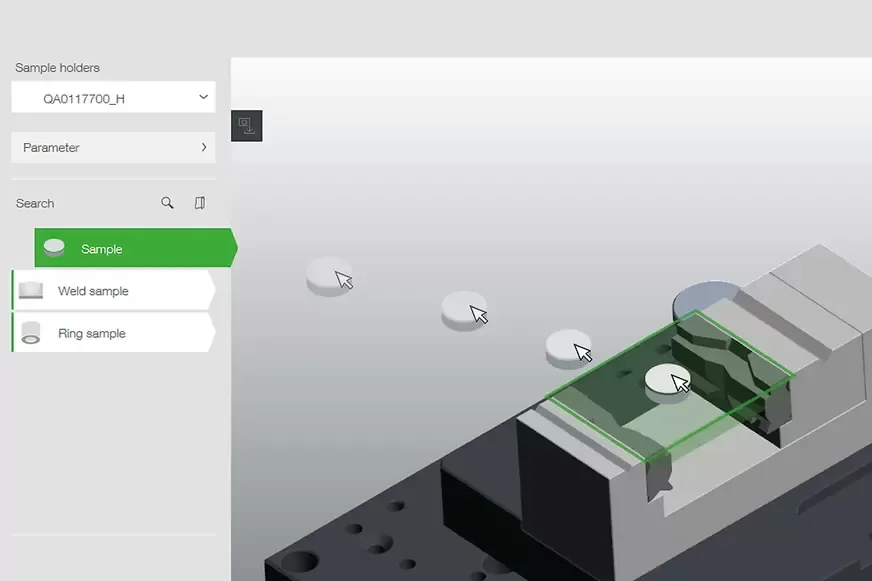
The sample holder is automatically moved to the correct height, and the sample image is automatically captured.
2. Positioning
2. Positioning
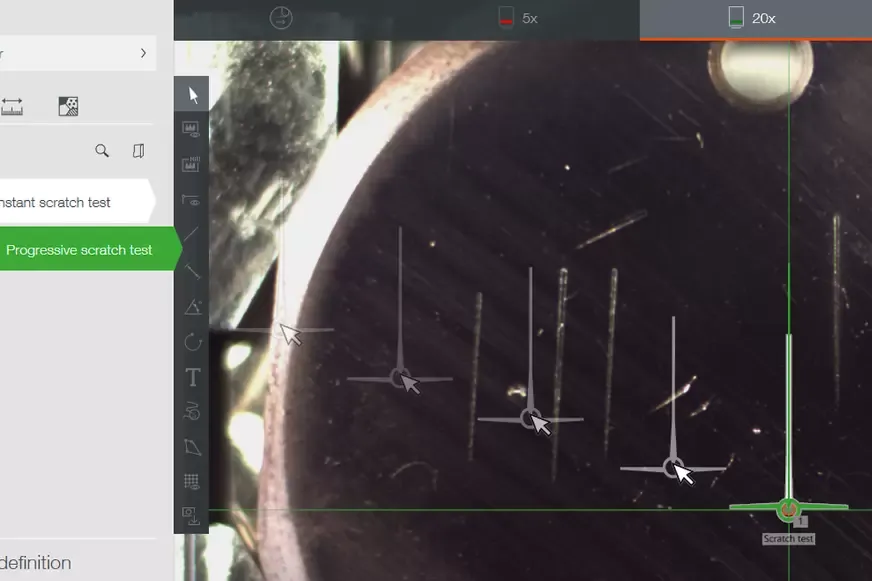
Drag and drop the starting point of the scratch test directly to the desired position.
3. Start Test Sequence
3. Start Test Sequence
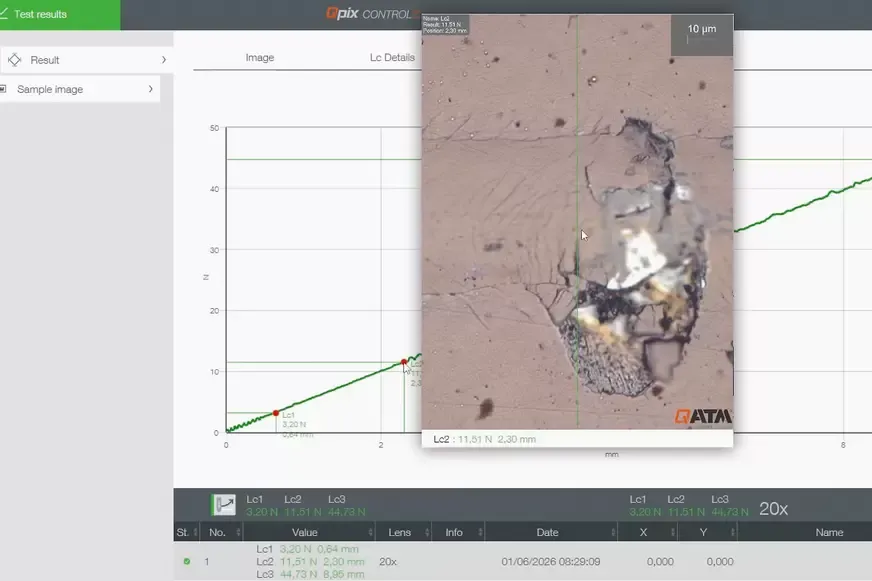
The test sequence is fully automatically and in accordance with the Scratch test standards. Subsequently, the failure events can be evaluated and assigned to the respective Lc points.
Software
Included features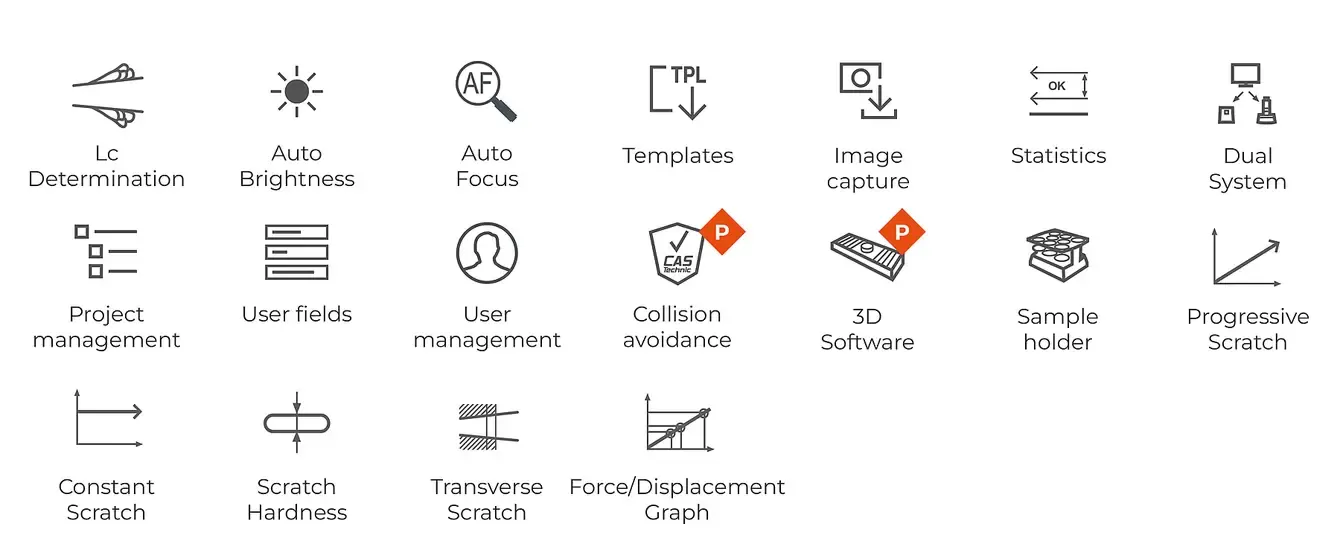
Software
Options

Microscopy & Analysis
Qpix inspect for crater-grinding and rockwell adhesion testing
The optional Qpix Inspect modules expand the Qscratch 20 with practical functions for coating evaluation. Crater-grinding supports microscopic coating thickness measurement in accordance with DIN EN ISO 26423, while the Rockwell adhesion test enables qualitative adhesion evaluation of ceramic coatings in accordance with DIN EN ISO 26443. This allows additional information on coating quality to be captured, evaluated, and documented directly within the familiar QpixControl2 software environment.
Qpix Inspect for microscopic evaluations
The intuitive and user-friendly Qpix INSPECT software functionality provides a comprehensive toolbox for microscopic evaluations and result documentation. The multifunctional software can be customized for customer-specific measuring tasks and complemented with add-on modules.